Why Oracle Stock Crashes 15% After AI Capex Triples, Raising Fresh Bubble Concerns

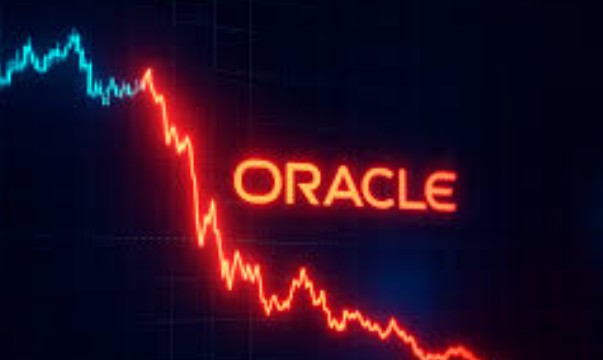
Oracle Stock Crashes: Oracle (ORCL) shares tumbled as much as 15% on Thursday after the company reported a sharp jump in AI-related spending and delivered quarterly revenue that fell short of expectations. The decline put the stock on track for its steepest single-day loss since March 2002.
The company disclosed $12 billion in capital expenditures for its fiscal second quarter, a dramatic increase from $4 billion a year earlier and well above the roughly $8 billion analysts projected, according to Bloomberg. Oracle also raised its full-year capital spending forecast to $50 billion, up from its previous estimate of $35 billion, as it accelerates investments in AI infrastructure.
Quarterly revenue came in at $16.06 billion, rising 14% year over year but missing the $16.21 billion that Wall Street anticipated. The results amplified investor concerns that Oracle’s aggressive AI expansion is outpacing its near-term returns.
Even robust growth in Oracle Cloud Infrastructure (OCI) wasn’t enough to calm the market. OCI revenue increased 68% to $4.1 billion, nearly matching analyst expectations. The company also reported explosive growth in remaining performance obligations (RPO), a key indicator of future revenue. RPO surged nearly 440% from last year to reach $523 billion, driven by large new commitments from Meta, Nvidia, and other major customers, according to CFO Doug Kehring.
Oracle delivered adjusted earnings of $2.26 per share, easily surpassing Wall Street’s $1.64 estimate and improving on the $1.47 EPS recorded last year. The company also boosted its long-term revenue projection by $4 billion, now expecting $89 billion in full-year revenue for fiscal 2027.
Still, investors focused on the risks tied to Oracle’s rapidly growing debt load and its dependency on OpenAI to meet ambitious revenue goals. Oracle shares have now dropped more than 40% since hitting a peak in September while major tech names in the “Magnificent Seven” have climbed roughly 10% over the same period.
Despite the sell-off, several analysts remained optimistic. William Blair’s Sebastien Naji wrote that Oracle remains well-positioned to benefit from the ongoing AI platform shift, even as its elevated spending and tight alignment with OpenAI introduce uncertainty.
But concerns about a potential AI bubble continue to rise across the industry. Oracle has become part of the broader debate surrounding the heavy leverage used for large data-center construction and the increasingly complex financial ties between major AI players.
ALSO READ – Will the Federal Reserve Rate Cut Happen? Sharp FOMC Divide Puts Powell Under Pressure